Tuesday, June 2, 2015

That Was The Week That Was–4th Week May


Back to The 1950s ?

1950s  Larry Kudlow Could Be Right.The CNBC Commentator said on May 23rd that we may never see true normalization of interest rates (4%). His guess means: No Boom and No Bust. All post-war recessions were preceded by an inverted Treasury yield curve, where short rates are higher than long rates. The back to the 1950s part of Kudlow’s thesis, from Eisenhower to JFK, short rates averaged between 1-2%, inflation was roughly 1.5%, the dollar was tied to gold, long Treasuries ranged 2-3%, and real growth was only 2.5%. The Fed is right to go slow with rate hikes, Kudlow said. Low rates back in the 50s were not a bad thing. ‘The trick is to avoid Ike’s (Eisenhower) mistakes of over-taxing and over-regulating the economy. CNBC.com 5/23/2015


WHAT AM I READING? confused9 Can’t Understand Your Account Statement?

I had a customer who’d call me and complain about everything. It was always something different. One time he called and fumed that his account wasn’t making any money, and didn’t I realize he was living on a pension, social security, a part-time job and income off his investments; and how in the world did I expect him to continue to accept these below average returns. And when he calmed down I asked him to explain his ire and he said his statement showed he only made 1 1/2% on his investments and that was inexcusable. It was then that I explained what he was looking at was his portfolio estimated yield and not his total return. He grumbled something that wasn’t close to an apology and said that the company should make things clearer, and hung up.   Reading an investment statement. I admit, is a challenge. If for example you take money out of your account, sell a security and reinvest some but not all of the selling proceeds, you may have to put on your Einstein cap to calculate where you are. If you miss something, fear not, at the end of the year all the investments you purchased are shown on your statement, along with those that you sold plus dividends, capital gains and interest earned. If you have investment activity every month you will get a statement every month. If not you will get a quarterly statement. In most cases your account statement will be accurate to the third decimal point. Once in a great while there will be a discrepancy. About 20-some years back a married couple opened identical investment accounts with identical amounts. The statements came back but one showed the investment value was for a penny more than the other. The couple were adamant in wanting to know why the difference. The reason is one account bought at a slightly different time than the other. It took a few hours to explain but eventually I  gave a penny to one and called it a day. Call me if you have questions on your account statement and I’ll try to answer.

shout7 Hey, Mister and Misses Middle-Class! You wonder why a  Cadillac costs $50,000 today and back in the 1970s cost only $12,000? Why the home you paid $125,000 could sell for $250,000? You wonder why you make more money today than you ever dreamed possible? Why social security retirement benefits are four times higher than your original starting salary? You wonder why and you still feel broke? You’re going feel more pain when… $15 AN HOUR MINIMUM WAGE becomes law of the land. Get used to it ‘cause it’s coming. If you’re an old poop like me you remember when starting out wages for teachers, lawyers and doctors, (yes, doctors), were $500-$600 an month! I’m talking less than a generation ago. It’s hard for me to get my tiny brain around $15 an hour minimum, but I do get it. I also get the fact that we won’t be seeing a Happy Meal anytime soon for a buck, or a nickel cup of coffee. This new minimum wage minimum will impact every industry. And the $15 minimum wage to employers will be more like $20 an hour with taxes, insurance and what not added in. Once it becomes law some people will lose their jobs so that others will earn the new minimum. If the Fed wanted to see inflation they’ll get it. Eventually the middle-class will end up paying for the pay hikes through higher costs on everything from insurance to food. We even may make more money because of the new minimum wage but the new raise won’t go as far. Prepare yourself for maybe a $5 apple and $25 burger, because sure as a future $30 an hour minimum wage those days are coming.

HomepgSectFrnt_gfx_x15.5

rental property I am always surprised to hear how much money people pay renting a home or apartment. With mortgage rates so low people who own homes and have a mortgage are enjoying the lowest interest rates ever. Not so with rental property. Rents in April rose at their fastest pace since 2013, outpacing home values. reported Zillow Rent Index. Right now renters spend more than a quarter of their monthly income. Home buyers are expected to pay 15 % of their monthly income on on property payments versus 30% for renters. MarketWatch.com 5/21/2015


Made me smile…CARTOON NEW YORKER MAY 2015

New Yorker, May  25, 2015

canola field getty images 

Canola fields Canada Getty Images

Hard Ground in Canada Makes Canola Oil a Valuable Resource. Deep fried foods are expected to increase in price as a drought in Canada is in trouble. According to MSN.com this is the worse year for Canola since 2010. MSN 5/25/2015


 WORKERS8 We don’t have a job crisis in this country we have a job skills crisis.- On the Frank Beckmann Show on WJR, guest commented that uber skilled engineers, software designers, teachers and others who have ‘best’ skills and talents have no problem with jobs. Our education system is broke.  WJR-AM Radio 5/27

and here’s a chart from Friday’s WSJ to illustrate the point…

HomepgSectFrnt_gfx_x15.5

 REAL ESTATE UP

existing home sales Getty Images

Existing Home Sales  Hit 9-Year High. NAR Pending Homes Sales Index rose 3.4% in April to a level of 108.7. An index of 100 represents an average level of activity.


Don’t Be A Slacker- Do Your Part! uncle same hiding his eyes MFS Chief Investment Strategist James Swanson said the market is ‘fairly priced’ and there is little chance of a valuation bubble. He also said that the consumer could become a major factor in helping the economy and the stock market grow at a faster pace. Erik Weisman MFS chief economist said the reason for this year’s market ‘tepid’ pace is the consumer. The consumer could be doing more. The economy shows no signs of problems such as overspending and too much credit. Economies have problems when they have excesses and I don’t see any excess, he said. shopping2 Financial Advisor Magazine May 28 2015

Questions call Paul @ 586 295 0430 or write him at pstanley@westminsterfinancial.com. Share this blog with someone who cares about their money.

SECURITIES OFFERED THROUGH WESTMINSTER FINANCIAL SECURITIES, INC. MEMBER FINRA/SIPC.

Sunday, May 24, 2015

That Was The Week That Was-3rd Week May


Devaluation of Money versus Inflation- What’s the Difference?

balloons I was having coffee with several clients a week ago and one of my clients said he had heard that the Chinese were attempting to persuade the IMF to label the Yuan as a reserve currency. Once this happened, my friend said, the U.S. dollar would be devaluated by 40% almost immediately, and anyone with ‘regular’ investments and savings would see the purchasing power of their money gone by that much. What could he do, he asked, to preserve his money when this happened?  Devaluation is not something new or altogether bad. In the 1930s nine world economies devalued their currencies, including the United States. This revived their economies hit with a global depression and stabilized currency rates. At the breakfast meeting my friend was saying that he heard that if he had $100,000 in the local bank and one day he would wake up only to find his $100,000 being able to buy only $60,000 of goods and services; or worse, the bank would only hand him $60,000 of his $100,000.  What my client is afraid of is a massive devaluation of the dollar overnight and losing all his savings. While that is not likely we are seeing countries make their ‘currency’ cheap versus their neighbors for the benefit of their exports. A cheap yen makes selling a Japanese car easier than a Mustang made in Detroit. A country, through its central bank, can do this by issuing more of their currency and buying that of their neighbors. (Remember this is called ‘Beggar Thy Neighbor’ from the 1930s devaluations). The average citizen of the country that is having their currency devalued is the one that feels the pain if they want to buy products from another country that has a stronger currency. The producer of a product with a country that has a strong currency loses money when the cost of their product in dollars is sold in another country with ‘cheaper’ currency. Nations prefer inflation to deflation; and countries try to have a ‘modest’ amount of inflation per year. A central bank can create an inflationary environment by raising interest rates and also by increasing the amount of money into circulation. Either too much of either can cause citizens and a country enormous pain. Currently the U.S. dollar is strong against those countries that are trying to dig themselves out of a global recession. The following illustrates how a company from a country with a strong currency suffers. (chart WSJ 1/27/2015)chart strong dollar wsj

You do not want to own cash in a severe deflationary environment.  The argument for what to do with a depreciating dollar due to inflation makes a case for financial experts to recommend that investors buy commodity investments such as precious metals, oil, invest in emerging markets, buy Treasury Inflation Protected Securities; and short the fixed income such as the 20-year Treasury. (As interest rates rise principal decreases and the short investment through an ETF covers that strategy). Call me if you want more information.

pressing money

Reserve Currency Definition. A foreign currency used by central banks and other major financial institutions as a means to pay debts and buy goods. The IMF defines that currency to be freely useable. The U.S. is recognized as the king of currencies and represents 60% of all global currency reserves. Other currencies are the euro and the yen. Oil internationally is traded in dollars. Another reason why oil is priced so low as the dollar is stronger versus other currencies.


UNSTEADY RECOVERYchart us recessopm unsteady footing

A weak economy suffers whenever something happens that could be shrugged off in an economy moving at moderate speed. One at snail’s pace slows whenever a bump happens in the road. Bad weather, the west coast port strike, political strife, overseas disruptions; all contribute to a first quarter that has had difficulty moving forward. This gives pause to the Federal Reserve to raise rates this June, even possibly September. The other problem is that in a slow growing economy and you are unable to grow at 3%-4%; the Fed doesn’t have room to cut rates in response to a downturn if one actually occurs.-James Stock, Harvard University economics professor, WSJ 5/18/2015

lucy shrink is in Investors either are nervous or blasé about the performance of their investments.  There are clients who examine their statements and shrug off small losses and others who want to know the how, when and why those losses occurred and what can be done to stem any future tide. The Bull Market celebrated its 6th birthday last March and is showing its age. Still Monday the Dow surprised us with a new high as did the S&P 500 Index. The Naz and Small Cap Index were also big gainers. Bob Doll at Nuveen Asset Management urges investors to be patient in an Barrons.com article published May 18th. Doll writes that earnings will drive the market higher but the current outlook for earnings is troubled. He goes on to say that he is not pessimistic and believes earnings will rebound and the economy recover. He is still in the Bull Market camp.


RMD FOR THOSE 70 1/2 PLUS. GET FORMS AND INFO BY CALLING OR E-MAILING ME. happy seniors2


Budget, Please! Those about to retire should sit down and do a budget. I’ve preached this for years. Know where you are and you’ll do better than if you don’t know. Most retirees think they’ll not spend as much money when they retire because they’ll be in a lower marginal tax bracket. Some think they’ll spend the same. The real savings will come from (1) Not paying a payroll tax (2) No retirement plan or HSA contributions (3) The odd dollars spent on work-related expenses: dry cleaning, lunches, and the strange evaporation of five dollars a day as soon as you walk out the door. Do a budget before you retire and you’ll feel better knowing.

tip of the hat 

bogle 4 Ya Gotta Wonder… Jack Bogle appeared on CNBC Tuesday and said there’s a lot to worry about…meaning the market. Then he gave confusing testimony. He explained that this was a hard time to invest since the options were limited. Stocks were high, and they can’t stay that way forever. I assume he meant that they could go down, and then he said he has lived with,’I think four 50% declines’, were his exact words. (I looked for 50% dips over the past 100 years and couldn’t find them.)  Bond yields were extremely low, Jack said, and it’s wise not to buy long-term bonds. The 86 year old then went and said that thought stocks were ‘fairly reasonably valued” if you take their earnings yield into account. So I gotta ask…   If you listened he gave two opinions. That’s confusing. The guys an icon, I get it, but here was a typical stock sales pitch calling it either way. Either you are or you’re not. No one from CNBC asked a question. Jack gets a pass from Talking Heads simply because he’s Jack. Power Lunch CNBC 5/19/2015


40% of All Unemployed Have Simply Given Up. CNBC 5/20/2015


Stocks Fell Slightly Wednesday. The markets briefly spiked up on news that a June rate hike was ‘unlikely’ Wednesday but then settled back and closed down. Transports fell off their highs. IBD reported that the Fed is worried about volatility once rate hike starts. THURSDAY mixed markets closed even as investors digested no likely rate hike in June.

memorial dayMarkets Closed Monday For Memorial Day- Remember what the day is for, to remember those who died while serving in the country’s armed forces. It was originally called Decoration Day and originated after the Civil War to honor both Union and Confederate soldiers who had fallen in the war. In 1966 President Johnson signed a proclamation naming Waterloo, New York, as the birthplace of Memorial Day. Wikipedia.org

Questions call Paul @ 586 295 0430 or write him at pstanley@westminsterfinancial.com. Share this blog with someone who cares about their money.

Securities Offered Through Westminster Financial Securities, Inc. MEMBER FINRA/SIPC.

Monday, May 18, 2015

That Was The Week That Was-2nd Week May


TAPER TANTRUM?


donkey  Ward McCarthy, chief financial economist at Jefferies, said Monday, that the bond market was getting beaten like a rented mule. It could get real ugly not only for bonds but for all assets if the bond  markets continue to spike and this is the ‘end to easy’ money, he said in a Barrons.com article. George Goncalves, head of equity strategy at Nomura, said, ‘..if this is the end of easy money, low long-term rates interest story and the Fed is not going to be able to hike, the long-term interest rate market is going to do the tightening for the Fed…’ On Monday Treasury yields went higher, putting pressure on stocks. The Economist reported May 6th a similar situation in the European markets. Barrons.com reported May 11th in Michael Kahn’s ‘Getting Technical’ column, long-term Treasury yields is the potential kryptonite for the stock market.Traders in the futures pit in Chicago said that the bond moves were similar to ‘a global margin call.’ As interest rates move up principal falls. If traders are using leveraged money, and cheap money, to facilitate what is called a ‘carry trade’, we could see a rapid and ugly unwinding of all assets. Markets closed off their lows on Monday. Sources, WSJ, Barrons.com, The Economist, CNBC.com 5/11/2015

Tuesday Markets Fell 100+ points at The Bell as a Carryover From Monday but Recovered Most of the Loss & Closed Off 38 Points on The DJIA.

WSJ Reported in ‘Markets’ Many Investors Still Bullish on Bonds.  The most recent selloff isn’t believed to be sustainable because of ‘tempered economic expectations’, and more balanced positioning by traders.  Still many bond investors believe the turmoil will be contained this spring despite volatility. A $24 billion sale of 3-Year Treasuries Tuesday drew the strongest foreign demand since 2009, and demand from U.S. investors also increased. 5/12/2015 WSJchart bond prices wsj 2015


jobs1 Better than expected Jobs report sent markets soaring Friday the 8th of May. It was a Goldilocks report- not too much and not too little. Enough to move equities but not enough to suggest that the Federal Reserve would be raising rates in June, or possibly September, Coming off an abysmal March number the Labor Department said that employers added 223,000 jobs and the unemployment rate fell to 5.4%. NY Times –economy – 5/8/2015.

robert c dollBob Doll,CFA, Nuveen Asset Management, Senior Portfolio Manager, appearing on Squawk Box, CNBC, May 8th; ‘Expect Choppiness & A Confusing Time… Going forward the market will only go higher based on earnings…’

help4MORNINGSTAR reports it could do better and asks for help:

style box Morningstar announced that its ‘Style Box’, used by professional and amateur investors for decades, may not be ‘stylish’ in today’s investment landscape. For decades Morningstar preached that allocation using the above style box was the only way for investors to manage their money. Now the firm says that while the style boxes, since 1992, were essential tools that it was only a ‘nice’ simplification. They’ve reached out to the investment community to help redesign their ‘style’ diagram for future use. Investment News May 4-8 2015.

Amateur and professional investors sometimes get carried away with ‘uber-sophisticated’ methods and forget basics.


munger Charlie Munger, partner of Warren Buffett, Berkshire Hathaway, keeps things simple for today’s investor. Munger is a lawyer, well respected value investor, philanthropist and Vice Chairman of Berkshire Hathaway Corporation. You can do far worse than read the wisdom of Charlie Munger.

  • Buy quality over value.
  • It pays to wait. Sometimes the best thing you can do is nothing.
  • Know what you want and build a checklist.
  • Keep up to date on developments around the world.
  • Understand basic math and compound interest.

Poor Charlie's Almanac The Wit & Wisdom of Charlie Munger/ Amazon 

MISSING THE 10 BEST DAYS OR 30 BEST DAYS OUT OF 10-YEARS. WHY SUCCESSFUL INVESTORS DON’T TIME THE MARKETS.

chart successful investing

china stock market3Monday China Announced Third Interest Rate Cut in Six Months. According to Mark Williams at Capital Economics, this is not the end of policy support. He expects a further reduction before the end of 2015. He also expects China GDP growth at around 7%. WSJ 5/11/2015

gambler2 INVESTORS DOUBLE-DOWN ON SPRING TURNAROUND. WSJ 5/14/2015

Investors are piling into oil, commodities and trimmed their bets on the dollar. As the dollar soared commodities fell and those assets are now in the crosshairs of investors who are betting on their rise. chart bets this spring 2015

According to WSJ expect the rally to continue to September when rates are expected to be hiked by the Federal Reserve.


TIMING THIS MARKET IS A NO-NO.scold2 The average investor shouldn’t be timing any market but some do with disastrous results. Consider how the week before ended, the new week started and finally what happened on Thursday as markets ripped higher almost 200 points on the DJIA. Here why investors should stick with their diversified investment plan: (1) American unemployment remains at a 15-year low. (2) There is little to low inflation. (3) Interest rates remain at historic low rates. (4) The jobs market is strengthening even as the economy somewhat struggles. (5) The dollar is slipping. (6) Europe is strengthening. Finally:There could be a 5%-10% correction but experts contend that this market could be 8% higher by the end of this year. The correction should be looked at as a ‘Buying Opportunity’.  Sources: BloombergBusiness 5/14/2015 (Improving Jobs Market), MarketWatch.com 5/14 (Jobless Claims Cling to 15-Year Low), CNBC, 5/14/2015 and  David Darst on the Closing Bell 5/14/2015

Questions call Paul @ 586 295 0430 or write him @ pstanley@westminsterfinancial.com. Share this blog with someone who cares about their money.

SECURIIES OFFERED THROUGH WESTMINSTER FINANCIAL SECURITIES, INC. MEMBER FINRA/SIPC

Monday, May 11, 2015

That Was The Week That Was-1st Week May


up Sandy Cutler, CEO of Eaton Corporation, speaking on Mad Money, CNBC, May 1st, provided a report card on the state of the U.S. economy. He confirmed that residential and non-residential construction, aerospace, cars and truck sectors are very strong. Non-residential construction is a large source of hiring in the U.S. and lower oil prices have driven a lot of jobs to that industry. Also, truck sales in 2015 could be 300,000 units. Manufacturers build trucks only because people need them. Only one sector of the economy seems weak and that’s retail. (The American public is not spending their gas pump savings as much as the experts predicted.) Mad Money 5/1/2015


william tell's son Target Date Funds are the investment du jour (default) for most 401k plans. Investors who either neglect or are unable to choose an investment when they sign up for their employer sponsored retirement plan often are automatically enrolled in a Target Fund that most approximates the year when they would ‘normally retire’. Target Date Funds are also a good choice for people who don’t want to think about investing and simply want a‘set it and forget it type savings plan.’ While certainly better than going to cash or short-term bonds as a default investment, investors should know there are certain cautions when owning a Target Date Fund. Target Date Funds vary from company to company even though all have identical named products that ‘mature’ at the same time frame. A Retirement 2020 Target Date Fund with ABC Funds one would think should be no different than Retirement 2020 Target Date Fund with XYZ Funds; but, in actuality could be widely different in the way it’s managed. Here’s a few things you should know about the product:

Target Date Funds are an all inclusive money management plan that should be invested,not as part of an investment plan, but as the complete investment plan.

Each Target Date Fund is managed differently and may be more or less risky than an identical  dated Target Date Fund with another management company.

The longer one holds the fund the more percentage of the underlying investment portfolio becomes fixed. This increases the risk of the investment to rising interest rates.

Target Date Funds can and have lost significant amounts of money. In 2009 Target Dated Funds lost on average 25% according to Kiplinger Magazine.

While not the investment panacea that some financial experts tout these funds will provide professional management, a decreasing equity risk profile, and a lifetime management even past their ‘retirement’ date.

Made me smile…

 cartoon obamacare2


In 2009, Paola Sapienza, associate professor of finance and the Zell Center Faculty Fellow at Northwestern University and Luigi Zingales pointed out: As trust declines, so does American’s willingness to invest their money in the financial system.

Americans unwillingness to trust institutions and businesses that will personally benefit them reflects in the confidence they have in a future comfortable retirement.

Employee Benefit Research Institute has published the 2015 Retirement Confidence Survey and discovered the numbers have rebounded to 22% of Americans are now confident about their retirement. Previously in 2014 only 18% of those survey were confident in a comfortable retirement. (note in the 1990s 51% were somewhat confident versus today’s 36%.)

chart confidence survey 2015

More info go to the website at EBRI Retirement Confidence Survey 2015.


Sell in May & Go Away? moving 12 

Considering how unexciting the first four months of 2015 have been traders may well want to hold-off their long cherished tradition of ‘selling in May and coming back in November’. Bob Pisani at CNBC confirmed that from May to October the S&P 500 Index was positive 65% of the time and while the November to April period was up 85% of the time over the past 20-years. The latter period handily outperformed the former 6-1. CNBC May 1, 2015


IBD REPORTED May 5th that Sam Stovall at Capital IQ U.S.said that Investors should not sell in May but rotate instead to small cap health care and consumer staple stocks. They rose on average 2% during this period. If you were sitting in cash or money market this would be far more than you’d earn there. INVESTORS BUSINESS DAILY 5-5-2015

Yes, Virginia, There is Inflation!

Inflation at the grocery and retail stores is being manipulated and hidden through slick packaging games. Packages for many products are getting smaller (thinner actually) while prices stay the same. Clothes, at some manufacturers, are shrinking in size and quality while price hikes are modest.
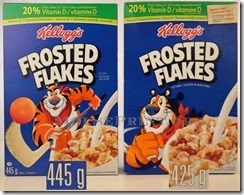
kellogsTony has lost some size.

pullups Pullups are 5% less.bountyBounty is missing sheets

ballpark1 pound hot dog pack is 15 ounces.

yogurt 10% less.

cat litterTwo pounds lighter!

Just a few I found and you can do the same by googling inflation and seeing your favorite potato chips, peanut butter, clothes soap and other goods downsized. I found these and more at Mouseprint.org.


news Excellent News! Factory Orders Rose Commerce Department Said May 4th. New orders for manufactured good rose 2.1% in March. Durable goods, autos and computers rose in March for the second time in three months. Markets up for the Monday.


Trade Deficit Slaps Markets!container ships bloomber peter foley

Tuesday markets cratered when the U.S. Trade Deficit came in at the highest level since 2008. It was up 43% in March. In dollar terms a seasonally adjusted $54.1 billion in March from a revised $35.9 billion in February, the Commerce Department reported May 5th. Before you get all excited you should know that the main culprit is that the West Coast ports got back to business after an extended strike and imports surged. Still there were those that worried that a strong dollar was making American exports too expensive while encouraging imports. Barclays Capital economist Jess Hurwitz wrote, ‘we do expect the net trade balance to drag on overall growth over the next several quarters.” Americans are consuming more and the dollar is stronger. BloombergBusiness 5/5/2015.

Sideways Market? Sure looks like one. sideways Having a portfolio that is comprised of dividend paying stocks is a great way to weather a sideways market. An investor doesn’t have to do anything fancier than sit and wait while getting paid. relaxing


janet yellen6Fed Chief Janet Yellen Called Stocks OverValued  Wednesday & Verbal Fist-a-Cuffs Broke Out & Markets Swooned. Yes, dear reader, Janet Yellen gave an opinion on what she thought of the stock market and lots of traders and investors took it to heart that she knew what she was talking about. The DJIA was having a so-so day before her words were heard on the Street and by the time you could say, “ Where’s The Ben Bernanke?’, the markets were off triple digits. The noise got so heated between those that said markets were fairly priced and those that agreed with Yellen, that CNBC almost had a fist fight on-air, except the two guys were split screen and miles apart. Cramer came on the air later in the day and scolded the Fed chief saying she may be good at running the Federal Reserve but ‘she’s no portfolio manager’. In fact, Yellen did say that while stocks were overvalued that they were not in relation to bonds. Markets later came slightly back and the Dow closed off 86 points and the Naz was even for the day. Sources CNBC.com, CNBC, WSJ., Bloomberg.

greenspanAlan Greenspan, the former Federal Reserve Chief, once commented about irrational exuberance in the markets and it took four years before the collapse.

Thursday Markets Bounced Back- Ignoring Yellen. bounce

Questions Call Paul @ 586 295 0430 or write him at pstanley@westminsterfinancial.com. Share this blog with someone who cares about their money.

Securities Offered Through Westminster Financial Securities, Inc. Member FINRA/SIPC.